Watercolor Tutorial Books: A Comprehensive Guide (2026)
Watercolor painting gains accessibility through dedicated tutorial books, offering step-by-step guidance for all skill levels, from beginner lessons to advanced techniques.
Watercolor painting, celebrated for its luminous transparency and expressive potential, presents a unique artistic journey. Unlike opaque mediums, watercolor relies on layering diluted pigments onto paper, creating delicate washes and vibrant hues. This makes it both incredibly rewarding and, initially, somewhat challenging to master.
For aspiring artists, a watercolor tutorial book serves as an invaluable companion. These resources demystify the process, breaking down complex techniques into manageable steps. They guide you through essential materials – from paper and paints to brushes – and introduce fundamental concepts like color mixing and layering.
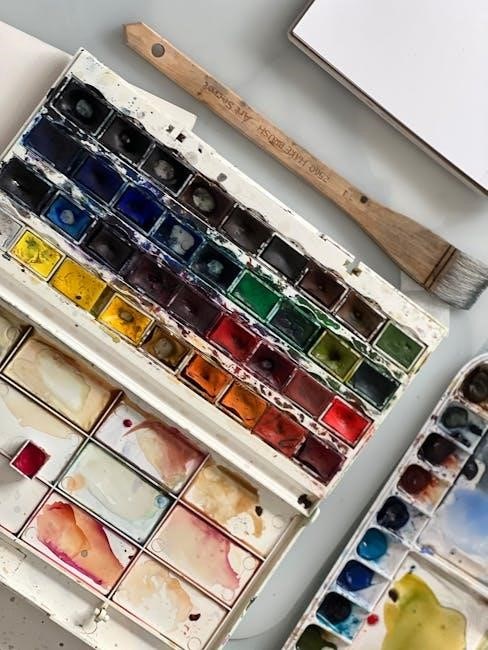
Whether you’re drawn to landscapes, florals, or abstract compositions, a well-chosen book can unlock your creative potential. The current landscape of watercolor instruction, as of 2026, offers a wealth of options, including titles like Jack Reid’s “Watercolor Basics” and Lacey Walker’s “Learn to Watercolor,” catering to diverse learning styles and preferences.
Why Choose a Watercolor Tutorial Book?
Embarking on a self-taught watercolor journey can be daunting. A watercolor tutorial book provides structured learning, eliminating the guesswork and frustration often encountered when relying solely on online resources. These books offer a curated path, building skills progressively from basic washes to more complex techniques.
Unlike scattered online tutorials, books present a cohesive and comprehensive approach. They allow you to learn at your own pace, revisiting sections as needed, and building a solid foundation. Titles like Mallery Jane’s “The Big Book of Watercolor” offer extensive projects, fostering skill development through practice.
Furthermore, books often include detailed material guides and troubleshooting tips, addressing common challenges. They’re a cost-effective alternative to expensive workshops, providing accessible instruction for artists of all levels. The availability of options, including those with included sketchpads like Lacey Walker’s book, enhances the learning experience.
Essential Qualities of a Good Watercolor Tutorial Book
A truly effective watercolor tutorial book transcends simple instruction; it fosters understanding and inspires creativity. Key qualities include clear, concise explanations accompanied by detailed, step-by-step illustrations. The best books, like Jack Reid’s “Watercolor Basics,” assume no prior knowledge, making them ideal for beginners.
Progressive learning is crucial – the book should build skills gradually, introducing new techniques only after mastering the fundamentals. Practical exercises and projects are essential for reinforcing learning and developing muscle memory. Look for books offering a variety of subjects, from landscapes to still life.
Furthermore, a good book will address essential materials – paper types, brush selection, and paint properties – providing informed guidance. Bonus features, such as traceable designs or included sketchpads, add significant value. Ultimately, the book should empower you to confidently explore your artistic potential.
Beginner-Friendly Watercolor Books
For those embarking on their watercolor journey, selecting the right introductory book is paramount. Lacey Walker’s “Learn to Watercolor” stands out, offering 20 step-by-step lessons specifically designed for beginners, even eliminating the need for prior drawing skills – a sketchbook is included!
Jack Reid’s “Watercolor Basics: Let’s Get Started” is another excellent choice, particularly for those struggling with washes. It provides thorough, step-by-step guidance, assuming zero prior experience, and allows you to complete paintings while learning. These books prioritize foundational techniques.
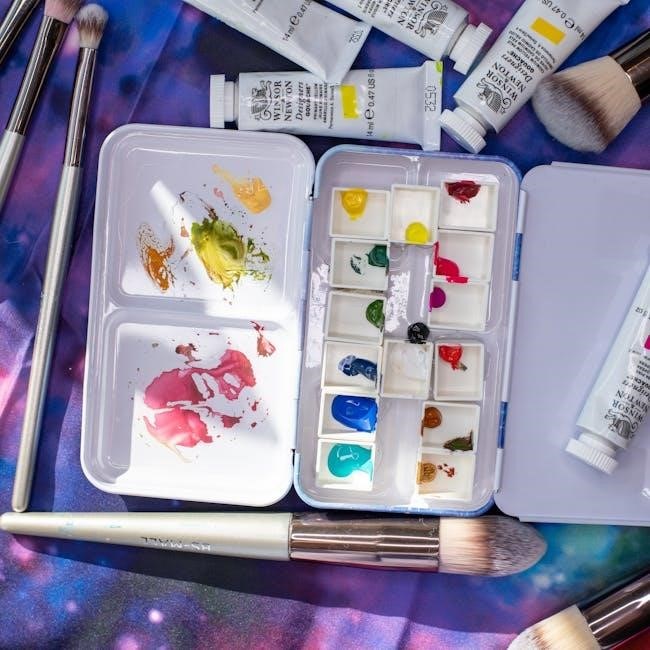
Many beginner resources emphasize simplicity and building confidence. They often focus on basic shapes, color mixing, and fundamental washes. Exploring options from artists like Jenna Rainey or Harriet de Winton can also provide accessible starting points, fostering a love for the medium.
Intermediate Watercolor Books for Skill Enhancement
Once comfortable with the basics, intermediate watercolor books focus on refining techniques and expanding your artistic range. Mallery Jane’s “The Big Book of Watercolor” is a comprehensive resource, offering a wide variety of projects ranging from simple to complex, and even includes traceable designs for convenience.
David Bellamy’s “Watercolor Landscape Course” is also highly recommended for those wanting to specialize in landscapes. These books assume a foundational understanding of watercolor principles and delve into more nuanced concepts like layering, color theory application, and creating depth.
Intermediate resources often challenge artists to experiment with different styles, subjects, and approaches. They encourage developing a personal voice and pushing creative boundaries, building upon established skills for artistic growth.
Advanced Watercolor Techniques & Books
For seasoned watercolorists seeking mastery, advanced books explore complex techniques and artistic expression. While specific titles dedicated solely to “advanced” techniques weren’t explicitly mentioned, building upon resources like Mallery Jane’s “The Big Book of Watercolor” allows for deeper exploration.
Advanced learning often involves mastering nuanced control over washes, layering, and color mixing to achieve photorealistic effects or highly expressive abstract pieces. Artists at this level typically focus on developing a unique style and tackling challenging subjects.
Further skill enhancement comes from studying the works of master watercolor painters and analyzing their techniques. Experimentation with unconventional materials and pushing the boundaries of the medium are also key components of advanced study.
Key Techniques Covered in Watercolor Tutorials
Watercolor tutorial books consistently emphasize foundational techniques crucial for success. Jack Reid’s “Watercolor Basics: Let’s Get Started” specifically addresses mastering washes – a cornerstone skill. Tutorials systematically guide artists through flat washes, achieving even color application, and graded washes, creating smooth transitions.
Layering is another key focus, demonstrating how to build depth and complexity by applying successive washes. Dry brush techniques are also commonly covered, enabling the creation of textured effects and details. These books often include exercises to practice these skills.
Beyond these, tutorials frequently delve into lifting color, masking techniques, and blending, providing a comprehensive skillset for watercolor painting. Learning these techniques allows artists to control the medium effectively and achieve desired results.
Color Theory for Watercolorists
Watercolor tutorial books often dedicate significant sections to color theory, recognizing its importance in achieving harmonious and impactful paintings. Understanding the color wheel, primary, secondary, and tertiary colors is fundamental, and books explain these concepts clearly.
Many tutorials explore color mixing, demonstrating how to create a wide range of hues from a limited palette. They delve into concepts like complementary colors – those opposite each other on the wheel – and how they create vibrancy when juxtaposed.
Furthermore, books address value (lightness and darkness) and saturation (intensity) and their impact on a painting’s mood and depth. Applying these principles, artists can effectively convey atmosphere and emotion through their watercolor work, enhancing their artistic expression.
Understanding Watercolor Paper
Watercolor tutorial books consistently emphasize the crucial role of paper in successful paintings. They explain that not all paper is created equal, and choosing the right type significantly impacts the outcome. Books detail the differences between various paper compositions, including cotton, cellulose, and blends.
A key focus is on how paper affects paint absorption, blending, and layering. Tutorials often demonstrate how different papers react to washes and dry brush techniques. They also discuss the importance of paper weight, explaining how heavier weights (like 140lb) are less prone to buckling and warping when wet.
Many books include guidance on paper surfaces, highlighting the benefits of hot-pressed (smooth) versus cold-pressed (textured) papers for different styles and techniques, aiding artists in informed selection.
Paper Weight and Texture
Watercolor tutorial books dedicate significant attention to paper weight, explaining how it directly influences a painting’s success. Lighter weights, typically around 90lb, are suitable for sketching and practice, but buckle easily with washes. Heavier weights, like 140lb and 300lb, are recommended for serious work, minimizing warping even with multiple layers.
Texture is equally vital. Cold-pressed paper, with its noticeable tooth, is favored for its ability to hold pigment and create interesting textures, often highlighted in tutorials demonstrating layering. Hot-pressed paper, smooth and refined, is ideal for detailed work and controlled washes.
Books often showcase examples of how different weights and textures affect the final appearance, guiding artists to choose based on their desired style and technique. They also suggest stretching paper to prevent buckling, a technique frequently demonstrated within the tutorials.
Watercolor Paint Types: Pans vs. Tubes
Watercolor tutorial books consistently address the debate between pan and tube paints, outlining the advantages of each for learning artists. Pans, pre-dried in small wells, offer convenience and portability, making them ideal for plein air painting and beginners experimenting with color mixing.
Tube paints, however, provide greater pigment concentration and allow for more control over color intensity and consistency. Books demonstrate how to easily squeeze out desired amounts, avoiding waste and enabling custom palette creation.
Tutorials often highlight that while pans are economical for starting, tubes offer a wider range of professional-grade pigments and are favored by experienced artists. They explain how to re-wet pans and maintain tube paint freshness, ensuring longevity and optimal performance.
Brush Selection for Watercolor Painting
Watercolor tutorial books emphasize that brush selection profoundly impacts painting outcomes, dedicating sections to various shapes and materials. Synthetic brushes are often recommended for beginners due to their affordability and durability, while natural hair brushes (like sable) offer superior water-holding capacity and responsiveness, favored by advanced painters.
These guides detail how different brush characteristics influence techniques. They explain that soft brushes are ideal for washes, while stiffer brushes excel in detail work. Tutorials often include exercises to practice brush control and explore diverse effects.
Books consistently cover the distinction between round and flat brushes, illustrating their unique applications. Round brushes are versatile for lines and details, while flat brushes are perfect for broad strokes and washes, providing a solid foundation for any watercolorist.
Round vs. Flat Brushes
Watercolor tutorial books consistently highlight the contrasting roles of round and flat brushes, crucial for mastering the medium. Round brushes, with their pointed tips, are incredibly versatile, excelling in detail work, fine lines, and controlled washes. They’re often the first brush recommended for beginners due to their adaptability.
Conversely, flat brushes boast a broader surface area, making them ideal for laying down large washes, creating sharp edges, and covering expansive areas quickly. Books demonstrate how to angle flat brushes for varied stroke widths and textures.
Many tutorials emphasize combining both brush types; using a round brush for initial sketches and details, then switching to a flat brush for broader applications. Understanding these differences, as explained in these guides, unlocks a wider range of expressive possibilities in watercolor painting.
Layering Techniques in Watercolor
Watercolor tutorial books frequently emphasize layering as a foundational technique for achieving depth and complexity. Starting with light washes, artists gradually build up color and value, allowing previous layers to subtly influence subsequent ones. This approach avoids harshness and creates luminous effects.
These books demonstrate various layering methods, including glazing – applying transparent washes over dried layers – and wet-on-wet layering, where colors blend directly on the paper. They also address potential pitfalls, like overworking the paper, and suggest appropriate paper types that withstand multiple layers without pilling.
Experienced painters often use layering to correct mistakes or refine details, as highlighted in instructional materials. Mastering layering, as taught in these guides, is key to unlocking the full potential of watercolor.
Wash Techniques: Flat, Graded, and Variegated
Watercolor tutorial books dedicate significant attention to mastering wash techniques, the building blocks of many paintings. A flat wash involves applying a consistent color across an area, demanding even brushstrokes and controlled water-to-pigment ratios, as demonstrated in step-by-step guides.
Graded washes transition smoothly from dark to light, requiring careful adjustments in pigment concentration or water volume during application. Variegated washes introduce multiple colors while wet, creating blended, organic effects. Books often illustrate these techniques with practical exercises.
Many resources, like Jack Reid’s “Watercolor Basics,” walk beginners through these washes, assuming no prior knowledge. These foundational skills are crucial, enabling artists to create skies, backgrounds, and subtle tonal variations, ultimately enhancing their watercolor work.
Dry Brush Techniques and Textures
Watercolor tutorial books frequently explore dry brush techniques, a method for creating textured effects. This involves using a brush with minimal water, dragging it across the paper’s surface to deposit pigment only on the raised areas, resulting in a broken, granular appearance.
These techniques are excellent for depicting rough surfaces like bark, stone, or foliage. Books often showcase how varying brush pressure and paper texture influence the final outcome. Mastering dry brush adds depth and realism to paintings.
Resources like Mallery Jane’s “The Big Book of Watercolor” often include projects specifically designed to practice these textures. Experimentation with different brushes and papers is encouraged, allowing artists to discover unique effects and expand their artistic vocabulary within watercolor painting.
Recommended Books: Current Best Sellers (2024-2026)
Several watercolor tutorial books consistently rank as bestsellers. Jack Reid’s “Watercolor Basics: Let’s Get Started” (2026) is praised for its step-by-step approach, ideal for those struggling with foundational techniques like washes. Many find it assumes no prior knowledge, making it exceptionally accessible.
Lacey Walker’s “Learn to Watercolor” (2024) stands out with its 20 beginner-friendly lessons and included watercolor pad, eliminating the need for separate supply purchases. It’s a complete package for newcomers.
Mallery Jane’s “The Big Book of Watercolor” (2024) offers a comprehensive range of projects, from simple to complex, and includes traceable designs for added convenience. David Bellamy’s landscape course is also highly regarded, offering a different approach to learning.
Jack Reid’s “Watercolor Basics: Let’s Get Started”
Jack Reid’s “Watercolor Basics: Let’s Get Started” (2026) is quickly becoming a favorite among beginners, particularly those grappling with watercolor wash techniques. The book distinguishes itself through its exceptionally clear, step-by-step instructions, meticulously guiding the reader through each process without assuming any pre-existing artistic knowledge.
A key strength lies in its practical application; learners actively complete paintings while mastering the demonstrated techniques. This hands-on approach fosters confidence and skill development. The book’s structure allows for gradual progression, building a solid foundation in watercolor fundamentals.
Reviewers highlight its effectiveness in demystifying washes, a common challenge for new watercolor artists. It’s a highly recommended starting point for anyone eager to embark on their watercolor journey.
Lacey Walker’s “Learn to Watercolor”
Lacey Walker’s “Learn to Watercolor” (published October 29, 2024) is designed for absolute beginners, offering a remarkably accessible entry point into the world of watercolor painting. This book stands out by eliminating the prerequisite of drawing skills, making it ideal for those who feel intimidated by sketching.
The book features 20 step-by-step lessons, all completed directly on the included watercolor pad with pre-drawn sketches. This allows learners to focus entirely on the watercolor techniques – color mixing, washes, and layering – without the added pressure of initial composition.
Currently a Best Seller in Watercolor Painting, it’s often touted as a fantastic gift for aspiring artists and painters, providing a complete starter kit for artistic exploration.
Mallery Jane’s “The Big Book of Watercolor”
Mallery Jane’s “The Big Book of Watercolor,” published by Page Street Publishing in 2024, is a comprehensive resource spanning 495 pages, designed to nurture watercolor skills progressively. This book isn’t just for beginners; it caters to artists seeking to expand their repertoire and refine their techniques.
The book’s strength lies in its structured approach, allowing artists to gradually build their abilities through a diverse range of projects, starting with simpler exercises and advancing to more complex compositions. It’s a fantastic choice for those who prefer a methodical learning style.
A particularly appealing feature is the inclusion of traceable designs, offering a helpful starting point for those who want to focus on painting and color application without the initial challenge of drawing.
Finding Watercolor Books in Libraries and Online
Watercolor tutorial books are readily accessible through both traditional libraries and online retailers, offering diverse options for learning. Libraries provide a cost-effective way to explore various titles and authors before committing to a purchase, allowing you to sample different teaching styles.
Online platforms like Amazon boast extensive selections, often including customer reviews and previews, aiding in informed decision-making. Many books, such as Lacey Walker’s “Learn to Watercolor,” are available in both physical and digital formats, offering flexibility.
Furthermore, online searches can uncover curated lists and recommendations from art blogs and communities, expanding your discovery beyond mainstream bestsellers. Don’t overlook library-friendly options when researching!
Continuing Your Watercolor Journey
Watercolor painting is a continuously evolving art form, and a tutorial book serves as an excellent launchpad, but it’s merely the beginning. Embrace experimentation, venturing beyond the structured lessons to develop your unique style and voice.
Consistent practice, coupled with exploration of diverse subjects and techniques, is key to sustained growth. Consider supplementing your book learning with online courses, workshops, or local art groups for collaborative learning and feedback.
Remember that even experienced artists revisit fundamental principles. Books like Mallery Jane’s “The Big Book of Watercolor” offer a wealth of knowledge for all levels. Enjoy the process, celebrate your progress, and let your creativity flow!